
Sustainable Leather Alternatives in 2026: What's Actually Ready to Use (and What Isn't)


If you've been following sustainable fashion for any length of time, you've heard the promises. Mushroom leather. Algae fiber. Cactus textiles. Lab-grown silk. Every year brings a new wave of headlines about materials that are going to change everything — and every year, most independent designers find themselves in exactly the same position: curious, a little overwhelmed, and with no clear idea of what they can actually use right now.
This article is not about what's possible in theory. It's about what's available, scalable, and genuinely usable for small and independent fashion brands in 2026. Let's learn about Sustainable Leather Alternatives.
The problem with bio-material coverage
Most coverage of sustainable materials falls into one of two traps. It either hypes the futuristic stuff that won't reach commercial production for another decade, or it lumps everything together as if "bio-based" automatically means accessible. Neither is useful if you're a designer trying to make sourcing decisions today.
The honest truth is that biomaterials exist on a spectrum — from fully commercial and widely available to small-batch and accessible with some effort to genuinely still experimental. Knowing which is which saves you time, money, and a lot of dead-end emails to suppliers.
What's actually ready to use

Cactus leather (Desserto)
This is one of the clearest success stories in sustainable materials. Developed in Mexico and now commercially available, Desserto is made from nopal cactus harvested without killing the plant and with minimal water and no irrigation. It behaves similarly to conventional leather in production — it can be cut, sewn, printed, and embossed. Pricing is higher than standard PU alternatives, but it's come down significantly as production has scaled. Several mid-size brands are already using it in accessories and footwear, and minimum order quantities have dropped to a level that's workable for smaller runs.

Apple leather (AppleSkin, Frumat)
Made from the pulp and skin left over from apple juice production in Northern Italy, apple-based leather has been quietly building a strong commercial base since the early 2020s. It has a slightly softer hand than cactus leather and works particularly well for accessories, wallets, and shoe uppers. It's blended with a polyurethane backing, which means it isn't fully bio-based — but as a lower-impact alternative to virgin PU or conventional leather, it's a solid, practical choice available through multiple suppliers.

Mycelium leather (Bolt Threads' Mylo, Ecovative)
This is where it gets more complicated. Mycelium-based leather — grown from fungal root networks — is genuinely impressive as a material. Soft, durable, and compostable under the right conditions. But production is still limited. Bolt Threads' Mylo has been used by brands like Stella McCartney and Lululemon in capsule pieces, but it's not yet available for open commercial sourcing. Ecovative's Forager product is moving toward broader availability. For most independent designers, mycelium leather is still a watch-and-wait material — exciting, but not yet something you can reliably build a collection around.

Algae-based textiles
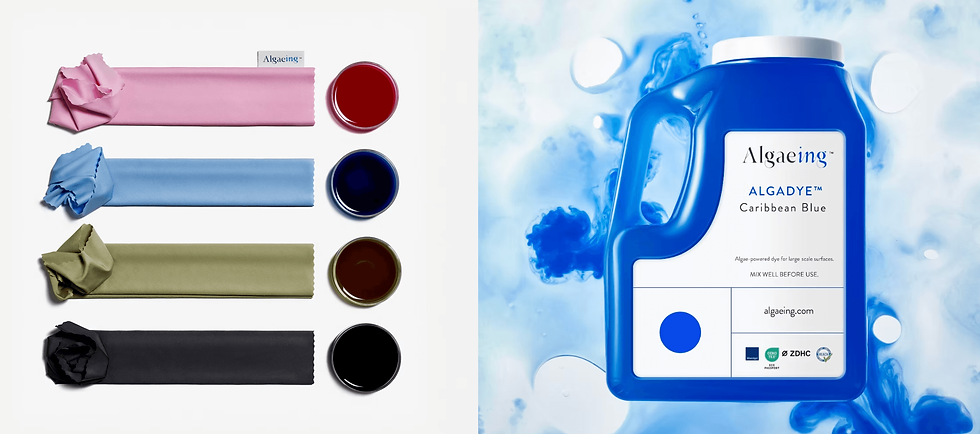
Companies like AlgiKnit and Algaeing are working with seaweed and algae to create fibers and dyes. The dye applications are further along — algae-based dyes are being used commercially and represent a genuinely accessible option for designers working with natural color. The fiber work is at an earlier stage, with durability still being refined. If you're interested in exploring applications of algae now, the dye route is the more practical entry point.

Pineapple leaf fiber (Piñatex)
One of the longer-established bio-based materials on this list, Piñatex is made from the waste leaves of pineapple harvests in the Philippines. It's been commercially available for several years and used in footwear, bags, and even upholstery. The texture is distinct — it has a natural woven appearance that doesn't try to mimic leather, which works well for designs that lean into the material's character. Minimum orders are accessible, and the supplier network has grown significantly.
What to look for when evaluating any new material
Before committing to any bio-material, it's worth asking three questions: Is it actually in commercial production, or still in pilot?
What's in the backing or carrier layer — is there still a synthetic component?
And what are the end-of-life conditions — does it require industrial composting, or can it break down more simply?
No material is perfect, and the honest answer for most bio-based options is that they represent a significant improvement over conventional alternatives in specific areas, with trade-offs elsewhere. The goal isn't perfection — it's informed decision-making.
The bottom line for independent designers
Cactus leather and apple leather are the most accessible starting points for small-batch designers right now. Piñatex is a strong option if the aesthetic fits your work. Mycelium is worth watching closely — within two to three years, it's likely to become genuinely accessible. And if you work with color, algae dyes are a lower-barrier entry point into bio-based materials worth exploring today.
The sustainable materials landscape is moving fast. But the best thing you can do as an independent designer isn't to chase every new development — it's to understand clearly what's ready, what's promising, and what's still in the lab.
Want more sourcing guides like this? Join the IFD community for weekly resources, member discussions, and direct access to a network of designers navigating the same questions.
Sources & further reading
Cactus leather (Desserto)
Desserto official site & FAQ — desserto.com.mx
Alternative Leathers Co. (supplier) — alternativeleathers.com/products/desserto-cactus-leather
KAESA, Plant-Based Spotlight: Desserto Cactus Leather — kaesa.co
Apple leather (AppleSkin / Frumat)
Frumat / VEGATEX supplier — appleskin.com
Circle Economy Foundation, Frumat Appleskin — knowledge-hub.circle-economy.com
Technofashion World, Frumat: the Leather Alternative Made from Apples — technofashionworld.com
Mycelium leather (Mylo / Ecovative)
Fast Company, Mushroom Leather Was Supposed to Revolutionize Fashion — fastcompany.com
CFDA Materials Hub, Mylo — cfda.com/resources/materials-hub/materials-index/mylo
Algae-based dyes (Algaeing)
Algaeing official site — algaeing.com
Ecocult, A No-Hype List of Seaweed and Algae Innovations in Fashion — ecocult.com
Sustainable Brands, 3 Material Innovators Using Algae — sustainablebrands.com
Pineapple leather (Piñatex)
Ananas Anam official site — ananas-anam.com
Alternative Leathers Co. (supplier) — alternativeleathers.com/collections/pinatex-pineapple-leather
⚠️ Note: Ananas Anam entered administration in October 2025. Verify current supplier availability before ordering Piñatex.

This breakdown is honestly so helpful for small designers—finally someone separates what’s actually scalable from what’s still hype. The note about Piñatex’s supply chain is crucial too. If you’re into this kind of practical material research, you might also enjoy this arrow puzzle for a mental break between sourcing calls.
i activated office from where to buy windows 11 logged with my microsoft account and entered the key
Sustainable leather alternatives sound great until you try to buy something that actually fits, lasts, and does not feel cheap. I once ordered wide-width shoes for a long workday and learned fast that comfort beats any trend label. A material can be ethical and still fail if the sizing is weird or the sole feels stiff. In that kind of shopping mood, onestopplus has to be judged by real fit comments, fabric feel, return ease, and whether buyers would wear the item again. Fashion ideals only work if the product survives daily use.
I really appreciate how clearly you broke down what’s actually usable right now versus what’s still in development it makes sustainable sourcing feel much more practical and less overwhelming. The comparisons between cactus leather, apple leather, and other alternatives were especially helpful. It even got me thinking about how these innovations could eventually influence everyday fashion pieces like a Womens Leather Jacket. Great post and very informative!