
Greenwashing vs Real Sustainability: How to Tell the Difference (Real Brand Examples)


There is a version of sustainable fashion that exists entirely in marketing language. Terms like 'conscious,' 'eco-friendly,' 'responsible,' and 'natural' appear on hangtags, in campaigns, and across sustainability pages — and precisely none of them have a legal definition. Any brand can use any of them, without proof, without audit, without accountability.
The scale of this problem is significant.
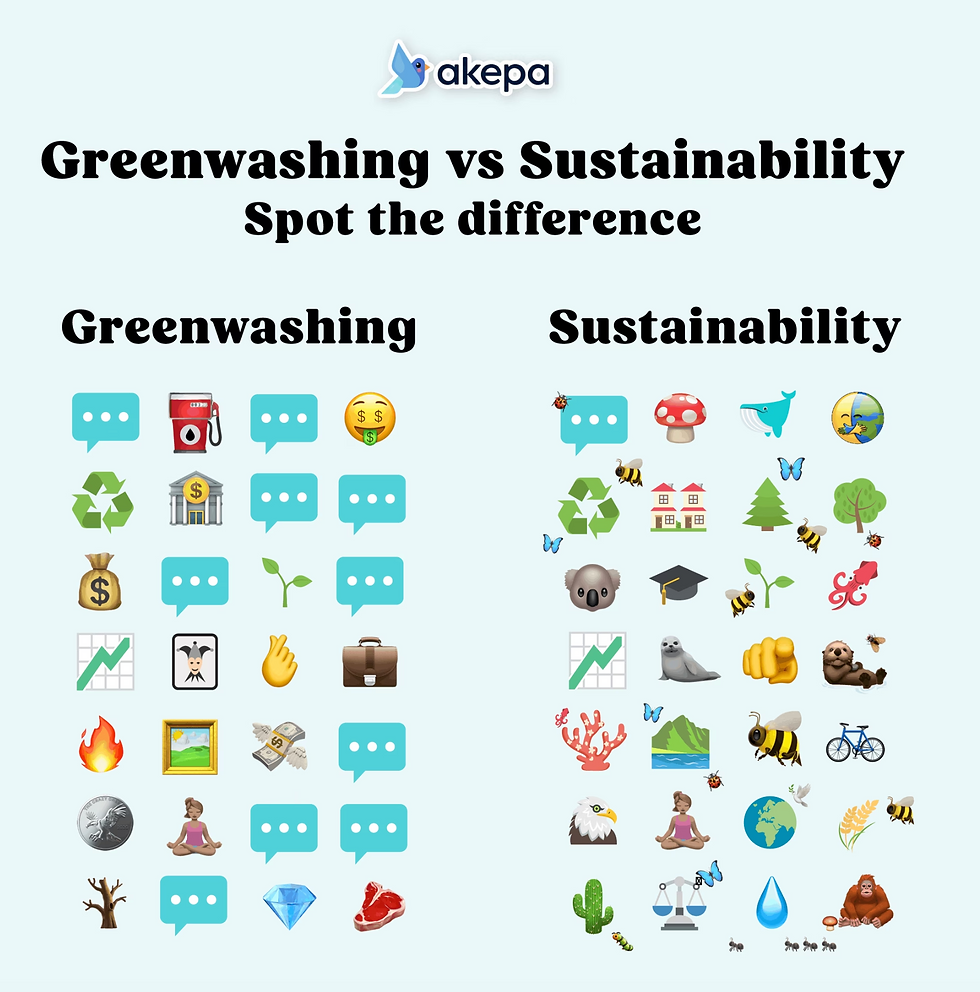
A 2021 report by the Changing Markets Foundation examined sustainability claims from major high-street fashion brands and found that 60% of claims were misleading overall — with H&M the worst offender, with 96% of its claims failing to hold up under scrutiny. [1]
For a fashion brand owner building with genuine sustainability commitments, this matters enormously. It means your credible practices exist in a landscape polluted by brands that use the same language without substance. Learning to communicate your sustainability accurately — and to spot greenwashing in others — is both an ethical responsibility and a competitive advantage.
What Greenwashing Actually Looks Like
Greenwashing takes several recurring forms. Conscious Life & Style's breakdown of the '7 Sins of Greenwashing' identifies the most common patterns: [2]
Hidden trade-offs. Promoting one sustainable aspect (recycled packaging, one organic cotton style) while ignoring the broader environmental impact of the rest of the business.
No proof. Making environmental claims without any evidence, certification, or data to back them up.
Vague claims. Using undefined terms like 'eco,' 'green,' 'natural,' or 'responsible' with no specifics.
Fake certifications. Creating self-designed green logos that look official but have no third-party verification behind them.
Token sustainability. Launching a small 'conscious collection' while the rest of the brand continues business as usual — Zara's 'Join Life' line is the canonical example.
The Brand Examples, Up Close
H&M — the "Conscious Collection" problem. In the Changing Markets Foundation's 2021 analysis, H&M was the worst offender: 96% of its green claims failed to meet UK competition guidelines. The detail that matters most for designers: H&M's Conscious Collection actually contained a higher share of synthetics than its main line — 72% versus 61%. The "sustainable" range was less sustainable by material composition than the regular one. Token sustainability and a hidden trade-off in a single case. (ASOS and M&S followed close behind, at 89% and 88% misleading claims respectively — this is systemic, not one bad actor.)
Zara (Inditex) — synthetics at scale. Zara's "Join Life" line is the textbook conscious-collection play. Meanwhile, its parent company, Inditex, reported one of the highest rates of synthetic fiber use by weight of any brand studied — comparable to Nike's. A labeled green capsule sitting on top of a business still built on fossil-fuel-based fiber.
Shein — what enforcement looks like. In August 2025, Italy's competition authority fined the operator of Shein's European website €1 million for misleading environmental claims across its #SHEINTHEKNOW, evoluSHEIN, and Social Responsibility sections. Regulators found the recyclability claims were false or confusing, and the emissions-reduction pledges were contradicted by an actual increase in Shein's greenhouse gas emissions in 2023 and 2024. It was the brand's second European penalty in two months — France had already fined it €40 million in July 2025. Greenwashing is now a financial and legal liability, not just a reputational one.
What Real Sustainability Looks Like
Genuine sustainability is quieter than greenwashing. It tends to be specific, verifiable, and honest about what a brand has not yet achieved, as well as what it has.
The markers to look for:
Third-party certifications with public databases. GOTS, OEKO-TEX, Fair Trade, B Corp, and Bluesign all have publicly searchable verification systems. Real certifications can be looked up. If a brand cannot provide a certificate number, that is a red flag.
Specific numbers, not adjectives. '90% of our fabrics are GOTS-certified organic cotton' is a claim. 'Sustainably made' is not.
Honest about gaps. Brands doing the real work know what they have not solved yet and say so. Greenwashers do not acknowledge limitations.
Repair, return, and take-back programs. Systems that keep products in use longer signal genuine circular thinking.
Independent audits and annual reports. Brands with real sustainability commitments have externally verified impact data, not just internal statements.

How to Verify What You Are Looking At
Whether you are vetting a supplier, evaluating a competitor's claims, or pressure-testing your own communications, these tools help:
Good On You (goodonyou.eco) — rates brands on environment, labor, and animal welfare based on publicly available data.
Fashion Revolution Transparency Index (fashionrevolution.org) — annual ranking of the world's 250 largest fashion brands by supply chain openness.
GOTS public database (global-standard.org) — search any brand or facility claiming GOTS certification.
OEKO-TEX Label Check (oeko-tex.com) — verify certificate numbers directly.
B Corp directory (bcorporation.net) — search certified companies and access their impact reports.
What This Means for Your Brand's Communications
If you are building a genuinely sustainable brand, the most important thing you can do is be specific and be honest. The language of vague sustainability has been so thoroughly corrupted by greenwashing that the only way to stand out from it is to say exactly what you do, show the evidence, and acknowledge what you are still working toward.
A few practical rules:
Sustainability communication principles for brand owners:
Every claim needs evidence: if you cannot back it up with a certification number, a supplier name, or a verified data point, do not make the claim.
Name your certifications specifically: not 'certified sustainable' — 'GOTS-certified organic cotton from [Mill Name]'.
Acknowledge what you have not solved: a brand that says 'our packaging is plastic-free, but we are still working on our shipping emissions' is more credible than one claiming total sustainability.
Never use terms without legal definitions as standalone claims: 'eco,' 'conscious,' 'responsible,' and 'natural' must be backed by specifics or dropped entirely.
The global sustainable fashion market was valued at $8.1 billion in 2024 and is expected to more than quadruple in value by 2033. [3] The consumers driving that growth are increasingly sophisticated — they can spot the gap between marketing and reality. Brands that communicate honestly will earn trust. Brands that greenwash will face growing reputational and regulatory consequences, as the Shein example demonstrates.

Want to build a sustainability story that's actually credible?
Download the IFD Fashion AI Starter Kit — including tools for researching certifications, building ethical brand communications, and developing a sourcing framework that holds up to scrutiny.
SOURCES
[1] The Sustainable Agency — Greenwashing in Fashion: Red Flags & Examples. https://thesustainableagency.com/blog/greenwashing-in-fashion/
[2] Conscious Life & Style — 7 Types of Greenwashing in Fashion: What You Need to Know. https://www.consciouslifeandstyle.com/how-to-identify-greenwashing/
[3] The Sustainable Agency — Greenwashing in Fashion: Red Flags & Examples. https://thesustainableagency.com/blog/greenwashing-in-fashion/
[4] Changing Markets Foundation — Synthetics Anonymous press release. https://changingmarkets.org/press-releases/fashion-industry-addicted-to-greenwashing-and-fossil-fuel-based-synthetics-uk/
[5] AGCM via Euronews — Italy fines Shein €1 million for greenwashing. https://euronews.com/business/2025/08/04/italy-hands-fast-fashion-retailer-shein-1mn-greenwashing-fine
Editorial Disclaimer
The information in this article was researched and compiled with the assistance of AI tools and reflects sources available at the time of writing. While every effort has been made to ensure accuracy, regulations, timelines, and industry developments can change. ifd recommends verifying specific compliance requirements with a qualified legal or regulatory professional before making business decisions based on this content. Links to third-party sources are provided for reference and do not constitute endorsement. Inside Fashion Design is not liable for decisions made based on information contained in this article.


I usually play short browser games during breaks, and Drive Mad has been one of the most entertaining ones I've tried lately. Every level feels a bit different.
Snow Rider proves that a great game does not need complicated mechanics. Its intuitive controls, smooth animations, quick loading time, and endless replayability create an experience that anyone can enjoy within seconds.
This article was enjoyable to read and the information was presented in a very smooth way. Anyone interested in quick online activities can play spacebar clicker online while exploring keyboard skills, tapping challenges, and score-based gameplay. It is a good option for people who prefer simple browser games without complicated setups.
Sustainability claims in fashion make shoppers think harder about trust, quality, and whether a brand’s image matches the real buying experience. Blair customers may be judging clothing by fit, fabric, shipping, catalog orders, returns, refunds, and customer service rather than marketing language alone. When product expectations and service details do not line up, https://blair.pissedconsumer.com/review.html becomes a review-based view of what buyers report. A brand can sound responsible, but the customer experience still has to hold up after purchase.
The information in this article was researched and compiled with the Basketball Bros of AI tools and reflects sources available at the time of writing.