
Iris van Herpen: Sculpting the Senses at Brooklyn Museum

INSIDE FASHION DESIGN
Inside “Sculpting the Senses”: Iris van Herpen at the Brooklyn Museum
A photo journal from IFD’s visit
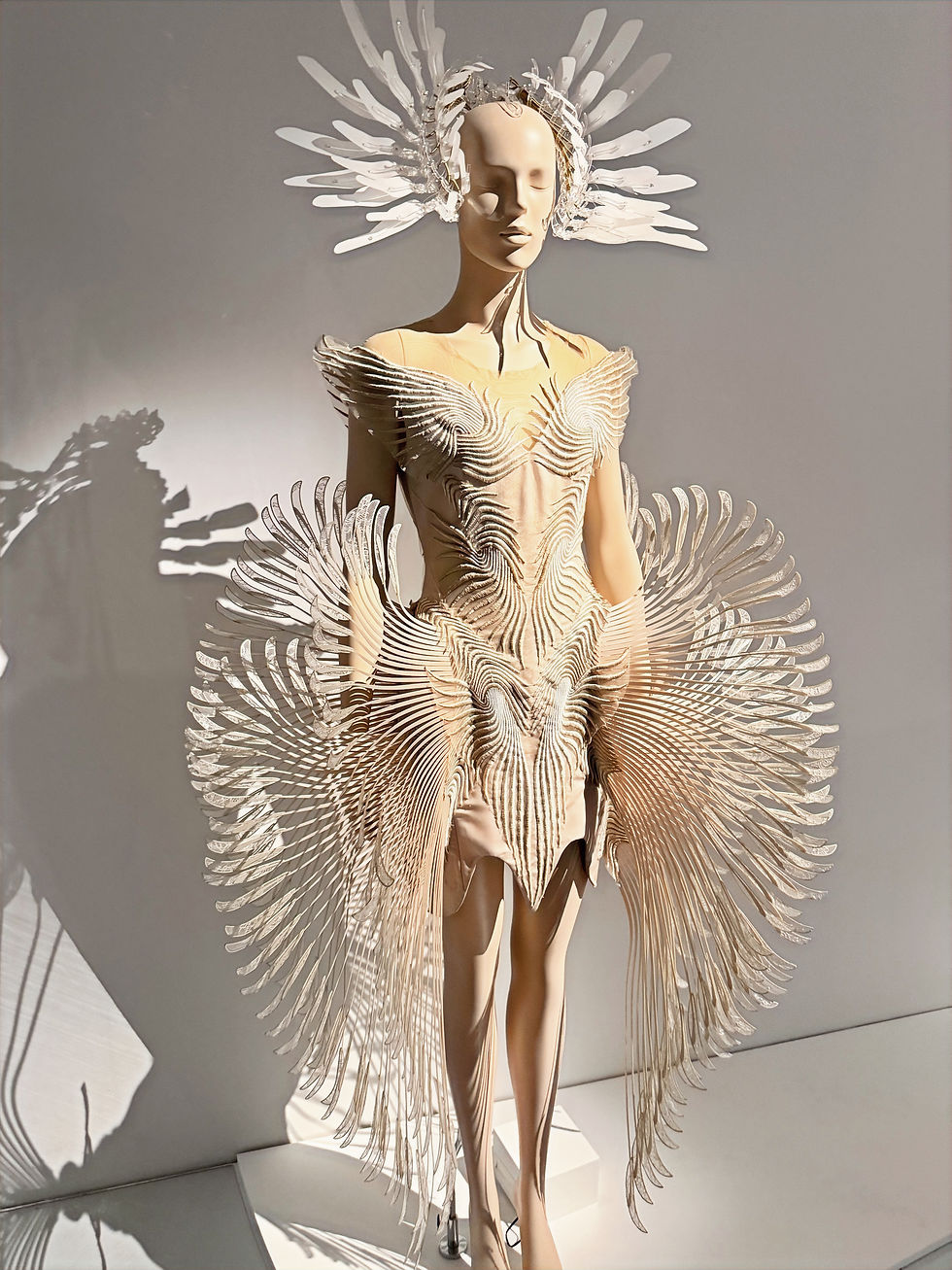
Hello, dear Conscious Fashion Friends! I had the opportunity to visit the Brooklyn Museum during a recent trip to NY for the exhibition Iris van Herpen: Sculpting the Senses, currently on view until December 6, 2026. It is her first major show in New York and marks the North American premiere of an exhibition that has already been shown in Paris, Brisbane, Singapore, and Rotterdam since it opened in 2023 (Brooklyn Museum).
As you step in, you are immersed in another world- the exhibition features about 140 of Van Herpen's couture garments from nearly two decades of her work and places them paired with pieces of contemporary art and natural history such as fossils, coral, and skeletal forms, which have been lent to the exhibition by institutions including the American Museum of Natural History and the Yale Peabody Museum (Galerie). It was amazing to see coral alongside her coral-inspired dresses- bringing two completely different mediums together.
Matthew Yokobosky and Imani Williford curate the exhibit, and Van Herpen has said this is the show's most personal edition to date, as it has evolved on its journey around the world.
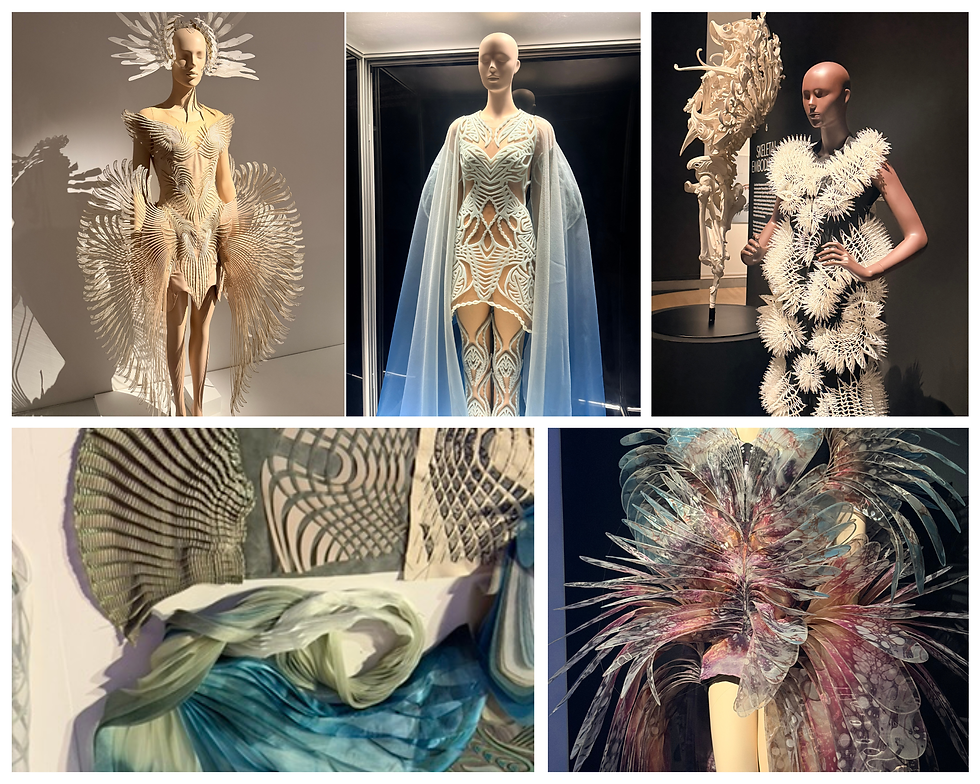
What impressed me as I was walking around was not merely the clothing but the way the exhibition deliberately blurs the boundary between fashion, science, and art; water is once more seen both as a source of inspiration and as a practical technique, together with natural shapes such as fossils and skeletal structures, which directly influence Van Herpen's decisions regarding construction.
As I walked into the exhibition, I was immediately struck by the incredible artistry behind apparel design. It reminded me how the human body is an amazing foundation for endless possibilities, no matter what resources you have. That realization sparked my passion for fashion design when I was a teenager. It’s such an exciting journey to see how different materials can be mixed and matched to create everything from beautifully simple pieces to wildly intricate ones, each with the power to completely change how someone looks and feels. This experience reminds me that everyone can be an artist, using their body as a unique canvas, whether designing or wearing, no matter what materials they have at their disposal.
So who is Iris van Herpen? I was so curious about her background and how someone learns to create such wearable innovations. So I did a little digging...read on to learn more....
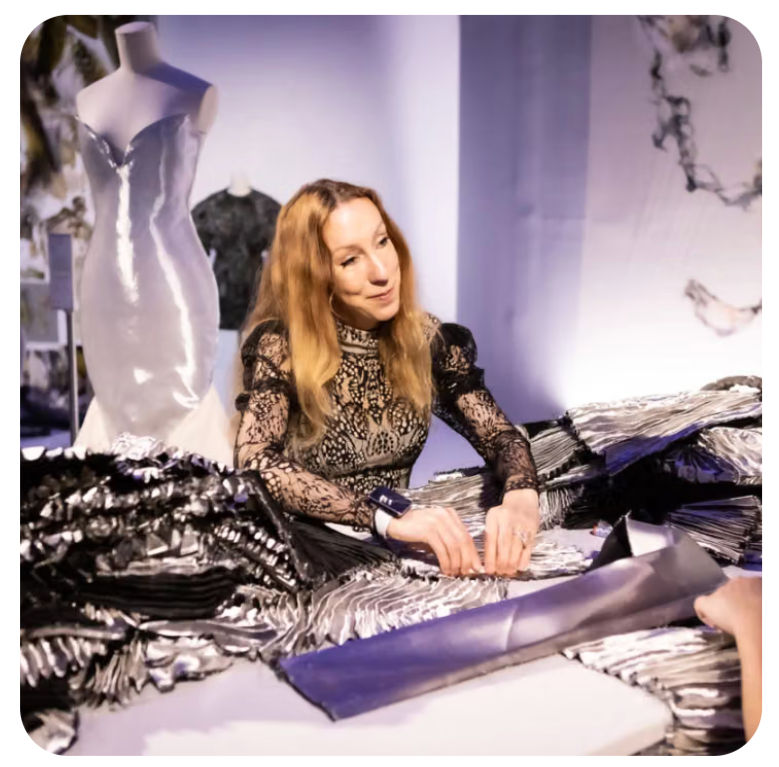
From a small Dutch town to the studio
Van Herpen was born in 1984 and spent her childhood in Wamel, a small town in the Netherlands. She initially expressed herself through classical ballet, painting, and the violin (UAL); dance has never left her work since (Art Basel).
Training — and the McQueen connection
She graduated in 2006 with a fashion design degree from ArtEZ in Arnhem (Wikipedia). She also completed an internship at Alexander McQueen in London and another with Claudy Jongstra, the Amsterdam-based textile artist known for her work with felt and natural dyes (Vermeer Award jury report). For designers, it's worth noting that she hadn't spent several years working at a major clothing company beforehand. Instead, her career path included two internships, a year traveling in Australia, and then launching her own label (jury report).
Going independent, early
She founded her label in 2007 in a studio in Arnhem. The first collection, Chemical Crows, was presented at Amsterdam Fashion Week and was made from the metal ribs of 700 children's umbrellas (according to the jury report). That fact says a lot: she began by combining unorthodox, cheap materials with a solid concept.
The turning point: 3D printing and Paris
In 2010, she presented one of the first 3D-printed dresses on the runway, Crystallization, in collaboration with architect Daniel Widrig and the Belgian company Materialize (Business of Fashion; DirectIndustry). In 2011, at 27, she became a guest member of the Chambre Syndicale de la Haute Couture in Paris (UAL). She later received several awards: the ANDAM Grand Prix in 2014, the European Commission’s STARTS Prize in 2016, and the Johannes Vermeer Award, a Dutch state prize for the arts, in 2017 (Wikipedia).

A studio built on collaboration
Her practice is highly collaborative, with other specialists in architecture, science, and technology effectively part of her design studio (jury report). Her partners have included Neri Oxman and MIT’s Mediated Matter Group, Stratasys, Delft University of Technology, the architect Philip Beesley, and artists from other disciplines (DirectIndustry; Business of Fashion). She has the final word on each couture piece before it leaves the studio.
So I had a big question when seeing her exhibit: How does she pay for it? So much advanced innovation....so I did some more digging....
The honest answer: it isn’t public, but here is what I found:
The most recent revenue figure is about $6 million (2021), and the house has about 11 to 50 staff. In both cases, these are estimates based on second-hand information and not audited figures. Sources: Creative Exchange Agency; Dealroom.
She holds a couture exhibition once a year and limits her output to a specific number of designs (UAL; Creative Exchange Agency). The brand also accepts external projects, such as the Rolls-Royce collaboration and the cocoa-bean dress made for Magnum (Creative Exchange Agency).
Her technology partners (Materialize, Stratasys, universities) are well known, but none of the sources state who paid for or supplied the equipment.

The lesson for independant designers is that her innovations came from partnerships and a clear creative perspective, not a large corporate organization—though the full financial details are still not public. For me, this means thinking outside the box: collaborations and partnerships are one way a designer can get support and opportunities you might not have otherwise. How about considering doing an exhibition rather than a fashion show? Who could you collaborate with that has technology or an audience you don't, and that could come together in interesting ways?
The Atelier, Recreated- INSPIRATION GALORE!
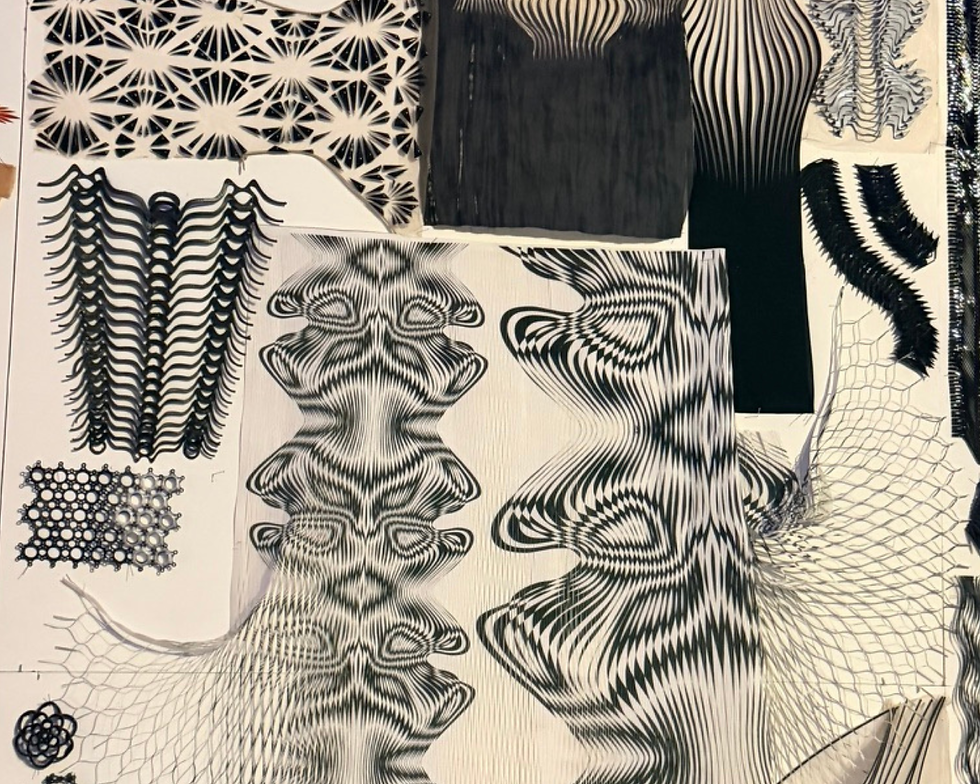
I can't pick a favorite part of this exhibition; I loved it all, but one section recreates part of Van Herpen’s real studio, giving visitors an inside peek of how she works- and that is the inspiration walls.

It's exciting to me to be surrounded by images, swatches, and everything you collect day to day, like a huge scrapbook! When creating a single item or a whole collection, I strongly recommend this—immerse yourself by filling your environment with objects that guide you along the way. I always keep bulletin boards and walls pinned with all sorts of ideas, and I notice that whenever I am working in the presence of these inspiring things, they help to keep my mind focused on the subject, on the correct path, and prevent me from straying when I come across something else that catches my attention... I enjoy collecting items for inspiration, and I think it's a good idea to save, file, or sort them into categories for later use.

Inspired by Water, Motion, and Materials
Water recurs throughout this exhibit, representing movement, texture, and transformation through techniques such as blown glass, thermoformed plexiglass, and suminagashi (Japanese paper marbling).
See more behind blown glass from her Sonic Starquakes collection

Collaborating with Art and Science
Here is an excellent illustration of how Van Herpen elevates her creative vision through collaboration. She has partnered with renowned artists such as Nick Knight, Tim Walker, and the collective Mé. Additionally, Van Herpen's designs are deeply inspired by natural history specimens, including coral, fossils, and skeletal forms. This approach grounds her sources of inspiration in tangible realities rather than abstract concepts.
Nick Knight, the highly praised British fashion photographer, produces striking, bold images that highlight Van Herpen's interest in morphing forms and technology.
Tim Walker: His surreal, theatrical fashion photography matches the dreamy, avant-garde character of the exhibition.
Mé (目): This Japanese art group is renowned for large-scale, mind-bending installations that challenge human perception of reality and align with the exhibition's sensory-focused themes. [1, 2, 3]
Patience is key! Two Decades, One Consistent Path: As a designer, adopt a long-term perspective; honing your skills, like any renowned artist, may take years.
The exhibition spans almost 20 years of Van Herpen's career and features more recent works, including her 2024 aerial sculpture 'Weightlessness of the Unknown', which debuts in this version of the show.

I was truly captivated by this exhibit; it was an immersive experience that resonated deeply with me. It reminded me that fashion transcends mere clothing, trends, or the prestige of top designers. Instead, it invites us to see fashion as a craft—an art form that can transform us. It influences not only our outward appearance but also how we express ourselves. Through fashion, we can forge connections with nature, beauty, and the earth, weaving narratives that reflect our unique stories and experiences. This journey through fashion celebrates creativity and identity.
What materials can you find to build your next design? Where will you look for inspiration you haven't explored before? Share in the comments!
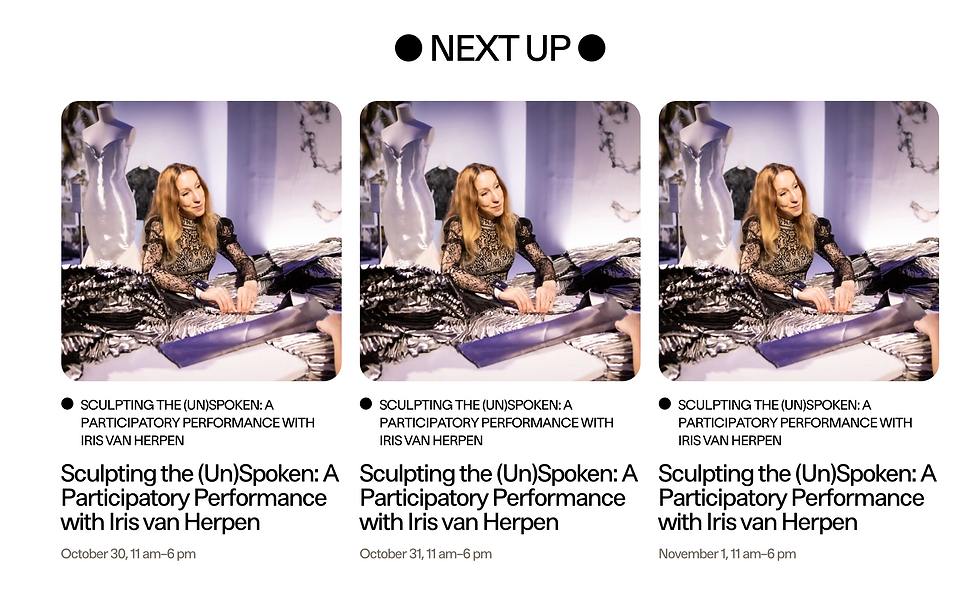
If you’re in New York before December 6, this one is worth the trip — full stop- see dates below for meeing Iris in person!
Happy Conscious Creating!
— Britta


Comments