
Circular Design in Fashion: How to Design With End of Life in Mind

Circular Design In Fashion
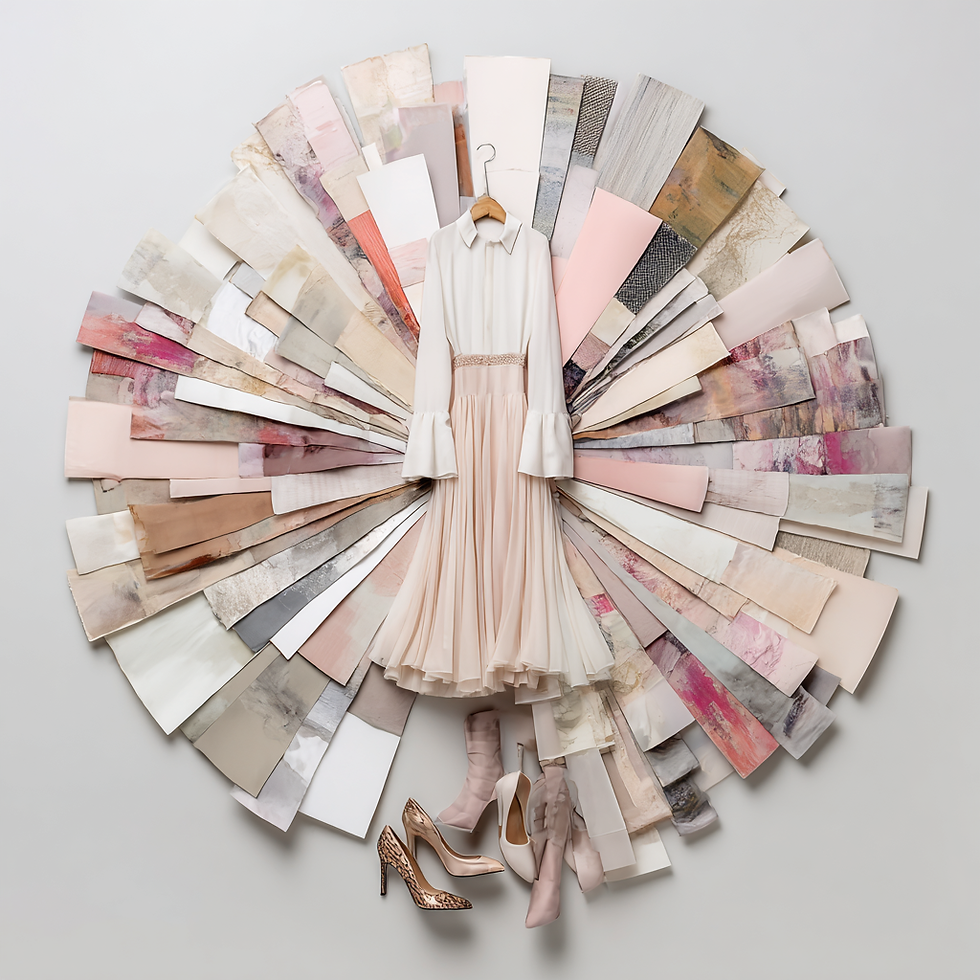
Every garment you design will eventually reach the end of its life. The question is whether you planned for that moment — or whether you left it entirely to chance, a landfill, or an overloaded donation bin that can't process what it receives. Let's dig into how to achieve circular design in fashion.
The numbers are hard to ignore. According to the Ellen MacArthur Foundation, every second, the equivalent of a rubbish truckload of clothes is either burned or buried in landfill. [1] In 2023, global textile fibre production reached 124 million tonnes — yet less than 8% came from recycled sources, and under 1% from recycled textiles. [2]
Circular design is the practice of addressing all of this before you pick up a pencil. It means making decisions at the concept stage — about materials, construction, and closure systems — that determine whether a garment can be recovered, recycled, or composted when its useful life is over. As Reconomy's Director of Circular Innovation, James Beard, puts it: "The first step in a circular solution is design. Choices made at the concept stage are where circularity efforts live or die." [3]
Here are five practical strategies you can start applying to your work right now.

1. Choose Mono-Materials
The single biggest barrier to textile recycling is blended fibers. A jacket that is 60% polyester and 40% cotton cannot be efficiently recycled — the fibers cannot be cleanly separated, so both end up degraded or discarded.
Designing in mono-materials — using 100% of a single fiber throughout a garment — solves this problem at the source. Helly Hansen's Mono Material line, launched in 2020, is built entirely on this principle: each piece uses a single material with no mixed fibers, making it fully recyclable at the end of its life. [4] When recycled, mono-materials maintain higher quality than blended alternatives — meaning the recovered fiber can actually go back into new textiles rather than being downcycled into rags or insulation.
For independent designers, this is one of the most actionable places to start. It does not require a large production run or a certification budget — it just requires a different conversation with your supplier at the fabric-selection stage.

2. Design for Disassembly
Think about every element of your garment that is not the main fabric: zippers, buttons, labels, trims, interlinings, padding, elastic, and underwire. Each one of these is a potential contamination point for recycling — and many are currently glued, fused, or sewn in ways that make them impossible to remove without destroying the surrounding material.
Designing for disassembly means choosing fastenings and components that can be easily separated from the garment's main body. This includes:
Using snap or clip-on hardware rather than riveted or fused trims
Choosing zippers and buttons that can be unstitched cleanly
Avoiding bonded interlinings in favor of sewn-in versions that can be removed
Specifying labels that detach rather than fuse
Gabriela Hearst's recycled cotton denim line is a strong reference point here — the collection features custom wood-inlaid brass buttons that can be removed for machine washing, a small design detail that also makes the garment far easier to sort and process at end of life. [5]
3. Prioritize Durability and Repairability
The most circular garment is one that never needs to be recycled because it lasts long enough that recycling becomes a distant question. According to McKinsey, brands that adopt circular design principles see a 20% reduction in production costs over time due to fewer returns and increased product longevity. [6]
Durability in circular design means building in repairability from the start. Practically, this means:
Reinforcing high-stress points (knees, elbows, underarms, pocket bags) with extra stitching or structural support
Providing extra fabric or thread with the garment so minor repairs can be made in matching materials
Documenting care instructions clearly — a garment that is cared for correctly will last significantly longer than one that is washed incorrectly and degrades prematurely
Designing in ways that allow alterations — a hem that can be let down, a waistband that can be taken in — extends the garment's life across changing bodies and trends

4. Think About End-of-Life Pathways Before You Finalize Your Design
Before you sign off on a final design, run through these questions:
End-of-life design checklist:
Can this garment be composted if it is made from natural fibers? (Is it free from synthetic threads, dyes, or finishes that would contaminate compost?)
Can it be mechanically recycled? (Is it mono-material and free from bonded or fused components?)
Could it be chemically recycled? (Is the fiber content compatible with available chemical recycling processes in your region?)
Is there a take-back program — yours or a partner's — that could receive this garment at the end of life?
Could it be safely donated and resold, or is the quality and construction designed to hold up to multiple wear and owners?
You do not need to tick every box. But knowing which pathways are available for your specific materials and construction will help you make better decisions — and communicate them honestly to your customers.
5. Learn from Designers Doing This at Scale
Gabriela Hearst is the most referenced designer in this space for good reason. Her Spring Summer 2026 collection sourced 97% of wovens and 83% of total production from deadstock materials from previous seasons — and she has been building toward this approach since launching the brand in 2015 with sustainability as a founding principle. [7]
Her supply chain transparency work with EON's digital product passport is also worth studying: QR codes on every garment link customers directly to material origins and recycling guidance.
For students and emerging designers, the Ellen MacArthur Foundation's Jeans Redesign initiative is an excellent case study — more than 100 brands and manufacturers are committed to producing denim that is durable, chemical-free, and designed for recycling from the outset. [8] The guidelines they developed are publicly available and directly applicable to your own design practice.
Where to Start if You Are Just Beginning
Circular design does not have to mean redesigning your entire collection overnight. Start with one material decision on one product. Choose a mono-fiber fabric where you might previously have chosen a blend. Ask your supplier what end-of-life options exist for the fabrics you are currently using. Remove one non-recyclable trim from a design and find a cleaner alternative.
These are small decisions with significant downstream impact — and the earlier in your career you build these habits, the more naturally they will inform everything you design.

Want to go deeper on sustainable design tools and frameworks?
Download the ifd Fashion AI Starter Kit — it includes resources on how to use AI to research sustainable materials, generate circular design concepts, and build an ethical brand from the ground up.
SOURCES
[1] Ellen MacArthur Foundation — Circular Fashion Overview. https://www.ellenmacarthurfoundation.org/topics/fashion/overview
[2] Reconomy — What is Circular Fashion? (2026). https://www.reconomy.com/2026/03/12/circular-fashion-explained/
[3] Reconomy — The State of the Circular Economy in the Fashion Industry (2024). https://www.reconomy.com/2024/09/03/the-state-of-the-circular-economy-in-the-fashion-industry/
[4] Helly Hansen — Mono Material: Singular & Circular Design. https://www.hellyhansen.com/journal/mono-material-singular-and-circular-design
[5] Gabriela Hearst — Sustainable Practices Timeline. https://gabrielahearst.com/blogs/stories/sustainable-practices-timeline
[6] Save Your Wardrobe — Circular Fashion Trends: Key Care and Repair Shifts for 2025. https://www.saveyourwardrobe.com/en-gb/blog/circular-fashion-trends-key-care-and-repair-shifts
[7] Gabriela Hearst — About the Brand. https://gabrielahearst.com/blogs/stories/about-the-brand
[8] Ellen MacArthur Foundation — A New Textiles Economy. https://www.ellenmacarthurfoundation.org/a-new-textiles-economy
Editorial Disclaimer
The information in this article was researched and compiled with the assistance of AI tools and reflects sources available at the time of writing. While every effort has been made to ensure accuracy, regulations, timelines, and industry developments can change. IFD recommends verifying specific compliance requirements with a qualified legal or regulatory professional before making business decisions based on this content. Links to third-party sources are provided for reference and do not constitute endorsement. Inside Fashion Design is not liable for decisions made based on information contained in this article.


我比較在意名字是否順口,所以用了 起名網 的工具看看。分析結果包含發音和字形搭配,看完之後很容易比較不同名字的優缺點。
Circular design is an important step toward creating a more sustainable fashion industry. Instead of focusing only on production, designers should also consider how garments can be repaired, reused, recycled, or safely disposed of at the end of their life. Choosing durable materials and timeless designs helps reduce waste and extends product lifespan. In addition, strong branding can educate customers about sustainability and responsible consumption. A professional logo design service can help fashion brands create a memorable identity that reflects their environmental values and builds trust with consumers. Combining circular design principles with clear brand communication is an effective way to support long-term sustainability while encouraging more conscious purchasing decisions.
It's interesting how this same philosophy thinking ahead about maintenance and longevity rather than just the initial result — applies in other personal care spaces too. I've been really happy with a place that does shapes eyebrow threading because they actually plan the shape with your natural growth pattern in mind, so it grows out cleanly instead of looking awkward halfway through.
For anyone still looking, I’d suggest windows 11 discount Bought a Windows 11 key there and it worked right away. Better than risking unknown sellers with questionable keys
Circular design sounds responsible, but it gets real only when a garment still makes sense after the first owner is done with it. My neighbor repairs clothes instead of tossing them, and she notices things most shoppers miss: weak seams, fake durability, trims that cannot be removed, fabrics that pill too fast. A nice concept means nothing if the item falls apart before it can have a second life. In that kind of fashion conversation, dm fashion can be judged by whether pieces feel wearable, repairable, and worth keeping beyond one season.